
Open LinkedIn or Twitter any given day and you’ll find a wall of posts: “Built an app in 2 hours with AI”, “$500 MRR from a weekend side project”, “Vibe coding changed my life”. Read enough of them and you might start believing that a good prompt is all that stands between you and passive income.
It isn’t.

Table of Contents
- 1. AI is genuinely changing how devs build - that part is real
- 2. The problem isn’t AI - it’s how people use it
- 3. The digital landfill keeps growing
- 4. The TablePro story - what doing it right actually looks like
- 5. What you actually need to make money with AI
- 6. Closing thoughts
1. AI is genuinely changing how devs build - that part is real
Let’s be clear: AI has meaningfully reduced the cost and time it takes to go from idea to working product. A solo developer can now ship things that used to require a whole team. That’s a real advantage, not hype.
But “working” is not the same as “needed.” And “needed” is not the same as “worth paying for.”
The gap between those three things is where most AI-assisted products die.
2. The problem isn’t AI - it’s how people use it
When AI makes building fast, the first question you ask should be: “Does this market actually exist? How many people need this? Will they pay for it?”
In practice, the first question most people ask is: “Can I build this?”
Wrong direction entirely. And that misalignment is the source of most abandoned products you see cycling through Product Hunt every week.
If you want AI to be a money-making tool, you need real answers to these questions before writing a single line of code:
- Who is experiencing the exact problem this product solves?
- How are they solving it today - and why isn’t that good enough?
- Of those people, how many will actually pay rather than just clicking “Interesting” and closing the tab?
No clear answers? Then what you’re building is a personal project. Nothing wrong with that - but don’t call it a business.
3. The digital landfill keeps growing
The consequences of building without strategy are visible everywhere.
Dozens of new AI tools launch every day. Same features, same UI patterns, same bugs. User data gets exposed because nobody thought about security during the excitement of building. API keys hardcoded into the frontend. No input validation. No rate limiting. SQL injection alive and well in 2026.
And when someone asks “Why did you build this?” - the answer usually fits one of these familiar shapes:
“I had leftover tokens, built it for fun.” “I just felt like it.” “To show off.” “To sell a course.”
None of those are wrong answers. But don’t frame it as “building with AI” or “indie hacking.” It’s burning tokens and time to produce something nobody uses, abandoning it, then chasing the next trend.
4. The TablePro story - what doing it right actually looks like
I worked with Datlechin - Ngô Quốc Đạt, the developer behind TablePro a native macOS DBMS client that’s been steadily pulling users away from TablePlus.
Đạt didn’t succeed on his first try. Before TablePro, there were other projects - Flatrum, Botble plugins, a PHP game shop - with very little to show for them in return.
TablePro is different. Not because of luck.
4.1. He identified a real gap, not an imaginary one
TablePlus is a genuinely good tool. Clean UI, smooth UX. But it has a problem: the author got greedy. The free tier is heavily restricted, the paid tier is expensive, and meaningful updates have been rare. Users kept using it not out of satisfaction but because nothing better existed.
That’s a signal. Đạt read it.
4.2. He pivoted at the right moment instead of pushing through
Initially Đạt tried building with Electron for cross-platform support. When he realized the app was heavy and slow, he stopped, rebuilt from scratch in Swift, and narrowed his focus to macOS only. The reasoning was simple: Windows already has plenty of free DBMS tools, so competition there is brutal. macOS users have fewer options and a stronger habit of paying for quality software.
That single decision saved the whole project.
4.3. He kept building - not just launching
New features ship consistently. The UI improves over time. Issues get responded to. Feedback gets read. Users can see the product is alive - not a dead repo waiting to be archived.
When traction came, Đạt opened sponsorship to cover costs and stay motivated. No complex business model - just a real person making a real product, with users who see the value and choose to support it.
4.4. Marketing without a budget - just being in the right places
No paid ads. But Đạt shows up everywhere his target users are: Laravel communities, macOS dev forums, GitHub discussions, tech Twitter. One user becomes two, two becomes four, and it spreads organically.
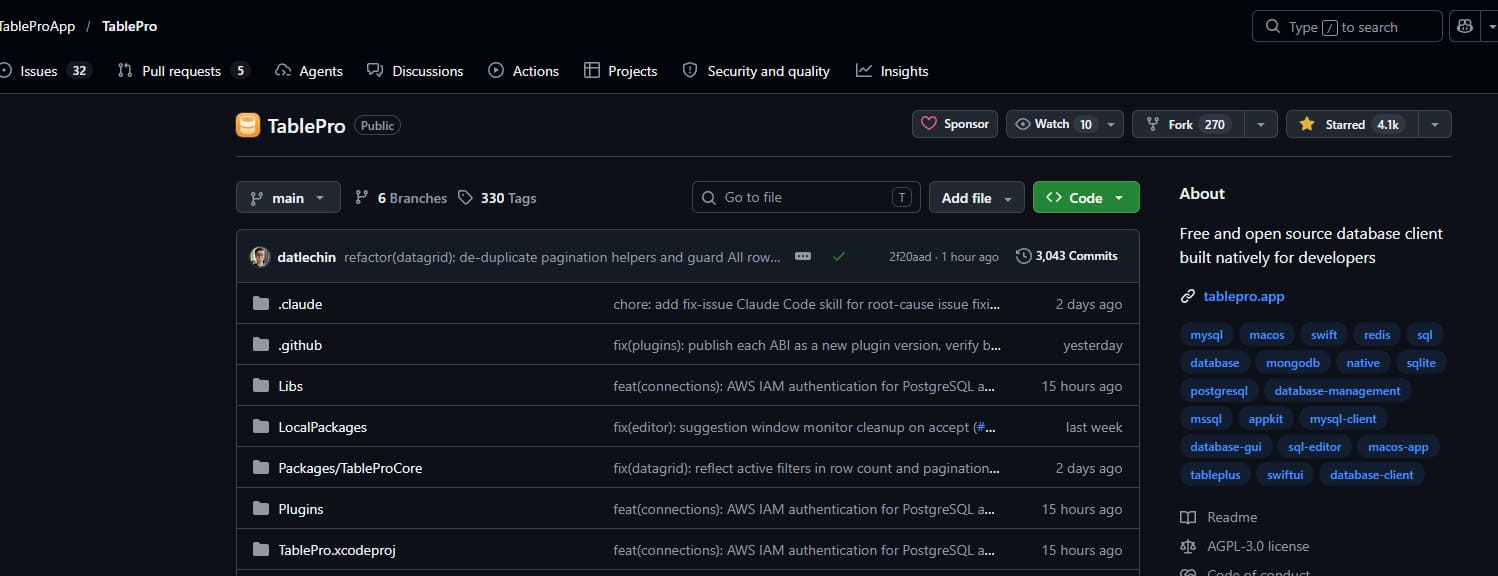
Over 4,000 GitHub stars didn’t come from hype. They came from solving the right problem for the right people at the right time.
5. What you actually need to make money with AI
No magic formula. But there are a few things you need to get right before you open Cursor or Claude:
5.1. Research first - build second
Understand the market before you write code. Not by reading trends, but by talking to real people. Who has this problem? What are they using now? What do they hate about it?
5.2. Find the gap - don’t add to the noise
Don’t build another to-do app or generic AI chat wrapper. Look for established products that are aging badly - stale features, ignored bugs, pricing that no longer makes sense. That’s where real opportunity lives.
5.3. Commit to maintenance - not just the launch
A product is not a sprint. It’s a marathon. Users leave when you go silent after launch. If you’re not ready to maintain something for at least 6–12 months, don’t open sponsorship or charge money.
5.4. Use AI where it actually helps
AI is excellent at accelerating execution. But it cannot replace the most important part: understanding your users. That part is still on you.
6. Closing thoughts
AI is the most powerful leverage individual developers have ever had access to. But leverage only helps when you place it correctly.
Throwing ideas at AI to build isn’t a strategy. It’s just a faster way to burn tokens.
What actually creates money - or at minimum, a product worth keeping alive - is understanding your market deeply enough to know you’re solving a real problem for real people. AI is the tool that helps you execute faster once you have that answer.
Stop adding to the landfill. Build less. Build right.